This is an exhilarating pose.Those who are afraid to do Sirsasana can conveniently practice this position. As the trunk is lowered in this asana it is fully stretched and healthy blood is brought to this region without strain on the heart. It rejuvenates the brain cells and invigorates the brain by relieving fatigue. Persons suffering from high blood pressure can do this pose."
This Blog is a way to express some of the context and background that supports our yoga practice that often does not get time within the yoga class. It hopes to be a source of information on Yoga to enrich your practice of the 8 limbs of Ashtanga Yoga. Asana is one part. Yogabody are independant yoga teachers based in Cranleigh, Surrey.
Monday, 9 February 2015
Why do Dog Pose?
This is an exhilarating pose.Those who are afraid to do Sirsasana can conveniently practice this position. As the trunk is lowered in this asana it is fully stretched and healthy blood is brought to this region without strain on the heart. It rejuvenates the brain cells and invigorates the brain by relieving fatigue. Persons suffering from high blood pressure can do this pose."
Friday, 23 January 2015
Progress in Practice 2
Saturday, 17 January 2015
Gentle Home Practice, 10 mins
A
Sit cross legged
Upright, chest lifted and broad
Feel each breath as it moves in the body
1. Interlace fingers and stretch arms up turning palms to face the sky
Repeat changing the interlace
2. Twist
Left hand to right knee, right hand on floor behind
As breathe out turn to right
Repeat twist to the left
3. Forward Bend
Sit tall and reach arms forward along the ground, stretch body forward. Feel your body breathing.
Sit up and repeat steps 1-3 with the other leg crossed in front.
B
Kneel
1. Interlace fingers and turning the palms to face the sky stretch arms up.
Repeat change the interlace
2. Twist
Left hand to right thigh, near the knee
As you turn to right stretch right arm back behind you
Centre and repeat turning to left
3. Forward Bend
Separate the knees comfortably and stretch both arms forward along floor. Rest your head. Keep the arms straight.
Feel your breathe move in the stillness
C
Downward facing dog posture
Be on all fours
Tuck toes under
Lift your knees off the floor lift hips to the sky
Straighten legs
Press hands into floor to stretch up and back towards legs
Press legs back
Breathe
And bend knees to come down
Rest in the kneeling forward bend of B3.
D Relax
Sit or lie flat and feel your breathing.
Expanding and softening, breathe in and breathe out
Breathe into the heart and out through the limbs
Hari Om
Friday, 16 January 2015
Progress in Practice 1
The way that we think and act in our everyday lives is often the mind set that we bring to our yoga practice.
Yoga is however an opportunity to notice our tendencies and become aware of other choices available to us.
It is common to play to our strengths, presenting to people the aspects of ourself that we want them to see. This re affirms our self image and we feel confident as a result. Socially this may work very well however do we ever explore the more tender areas of ourselves. Do we listen to our sadness and how it feels in the body? Or is it supressed along with other emotions that are "inconvenient"?
Our yoga practice is an opportunity to listen and feel. Acknowledging the areas of stiffness or dullness in the bodymind and gently 'opening up, breathing into and extending from.'
It takes courage to do asana without our habitual thoughts getting in the way, and without our strengths dominating. Giving time to explore other aspects of ourselves is a way to open up to the truth. Satya is one of the first principles of yoga. It means truth and light. On the yoga mat we have the opportunity to turn towards our truth, the perhaps uncomfortable truths.
Growth lies in exploring our vulnerability. It might be helpful to notice which parts of the body are being sacrificed in order to do a certain yoga posture. In order to achieve one thing something else often gives. A state of balance arises when we become aware of this interplay between aspects of the bodymind.
Which parts of your body often do the giving? Which parts are often ignored as 'inconvenient' or 'nothing to worry about'? Can they have a voice too?
Which parts of your body are dominant and are often the leader? Which bits do you present to others?
Yoga is turning towards yourself, pointing you to you. This is the light of yoga.
Sunday, 4 January 2015
Arriving
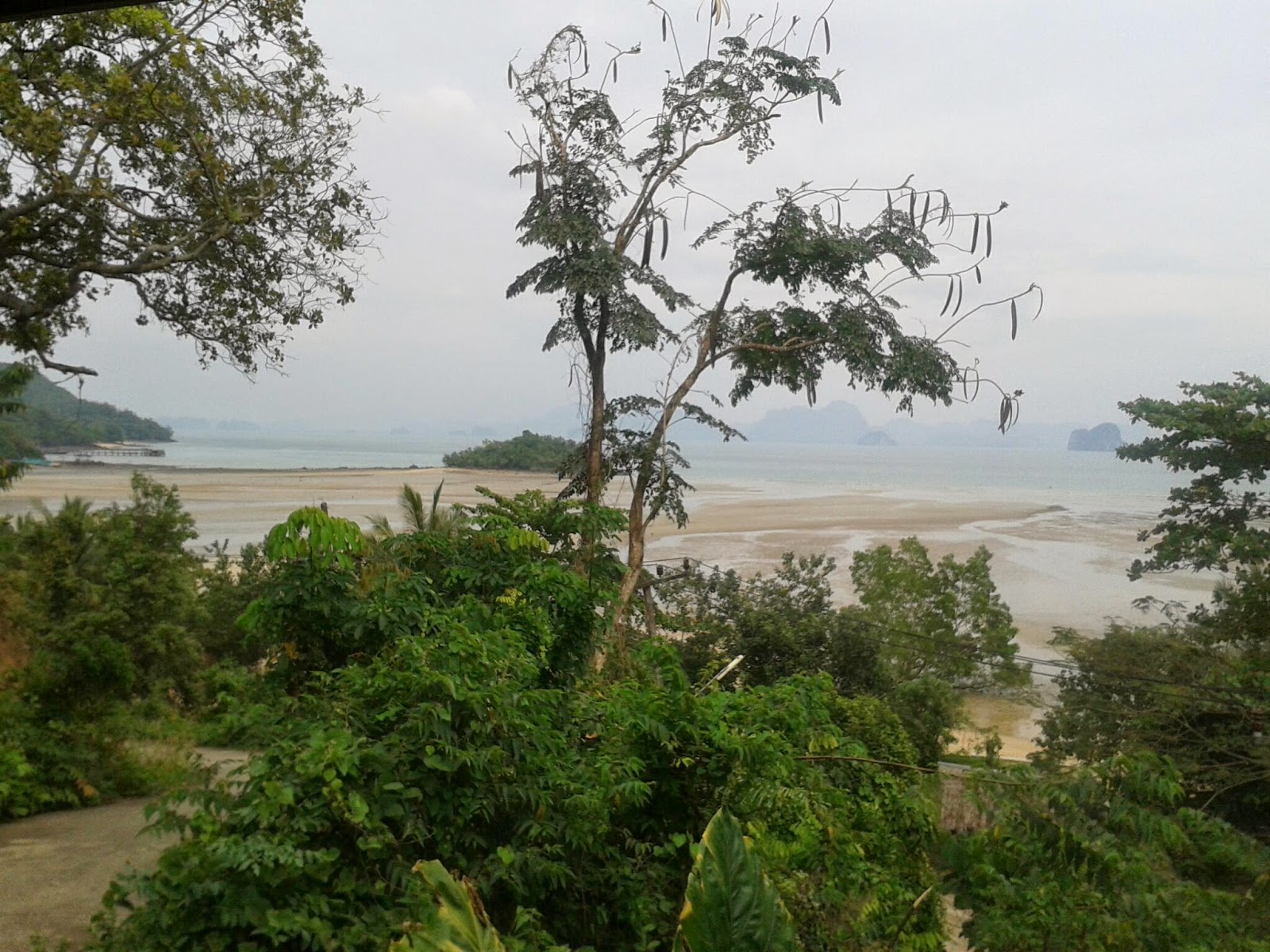
Gazing over the sea after vegetables, rice and omlette lunch
Reflecting on Satya- truth. This is the second principle of yoga.
Being clear that what we are saying is the truth, rather than being based on false judgment or misconception or exageration. Gossip is a good example of this.
Can we begin to notice when we speak confidently about something that is not actually based on truth? It has been anticipated, expected or imagined. What we say is distorted by our wants and needs, rather than accurate knowledge of the situation.
Right thought, right speech and right action are the basis of mindfulness. They are also integral to this yogic principle Satya.
Silence is always a good option. It gives us a moment to breathe and to notice what sensations are happening in the body. Speech then arises from this silence and this clarity of awareness.
In our Asana practice we can have many moments of spaceousness to breathe and feel. This helps us to carry out right action in the limbs, muscles and bones.
Yogic principles are embodied as well as lived.
Namaste
Thursday, 18 April 2013
Restorative Yoga
This staying in a posture enables the ‘doing’ part of the mind to settle and the ‘being’ part of the mind to surface. This receptive ‘being’ mode of observation and awareness is profoundly healing. It can help to boost the immune system, improve sleep, and reduce anxiety and stress.
In a wide range of Asanas, parts of the body are elevated, compressed, extended and relaxed which cleanse the organs, strenghtening the digestive, hormonal and nervous system. Through the precise and skilled practice of Asana the mind quietens and the body heals itself.
Sarra creates a supportive space for people to find peace and rest from the frantic activities of their daily lives. Each person is encouraged to practice with acceptance and compassion towards themselves and each other
I run monthly workshops at Yoga Mama's studio in Brighton. www,yogabody.org.uk
Monday, 15 April 2013
Why I love Iyengar Yoga?
I drove for an hour and a half in the dark along windy country lanes to get to a yoga class last night.
Why?
There are classes taught much closer by. Part of me wonders whether I just tend to value things that are hard to get, that require some kind of mission. Whilst there is a hint of truth in this all became clear
I staggered across the carpark with bolster and mat in hand, belt trailing on the floor behind me, clutching my handbag, keys, torch and half opened water bottle. It had been a long day. I am sure you know the feeling- in bits yet someone together.
With warmth the Yoga teacher welcomed me and as I snuck into the door late I sat, the opening chant began.
My heart swells and the edges of my mouth curl as I recollect that simple moment of unity. Unassuming and with sincerity the class began.
The flow of classical asanas were sequenced to give the extension and actions that then fed into the next asana.
Alignment has grace. In each classic pose the uniqueness of the individual is expressed. The stiffness, flexibilty, strength and awareness, of the body shape the asana. Like perhaps water flowing is shaped into a river by rocks and mounds. There is a direction to the river. Alignment of the body helps bring direction in the asana. The energy and awareness can then flow.